XPeng IRON: the humanoid they had to cut open with scissors
In November 2025, at XPeng's AI Day in Guangzhou, a humanoid called IRON walked onto the stage. It did not walk like a robot: it swung its hips, moved its arms and advanced with a fluidity that, online, had only one plausible explanation. Thousands of people said the same thing — there is a person in a suit inside. About twenty-four hours later, CEO He Xiaopeng put the robot back in front of the cameras and cut its leg open with a pair of scissors until the actuator was visible. He called it "a rather forced last-resort solution". It worked: the conversation shifted from whether it was fake to what was inside.
Why nobody believed that video
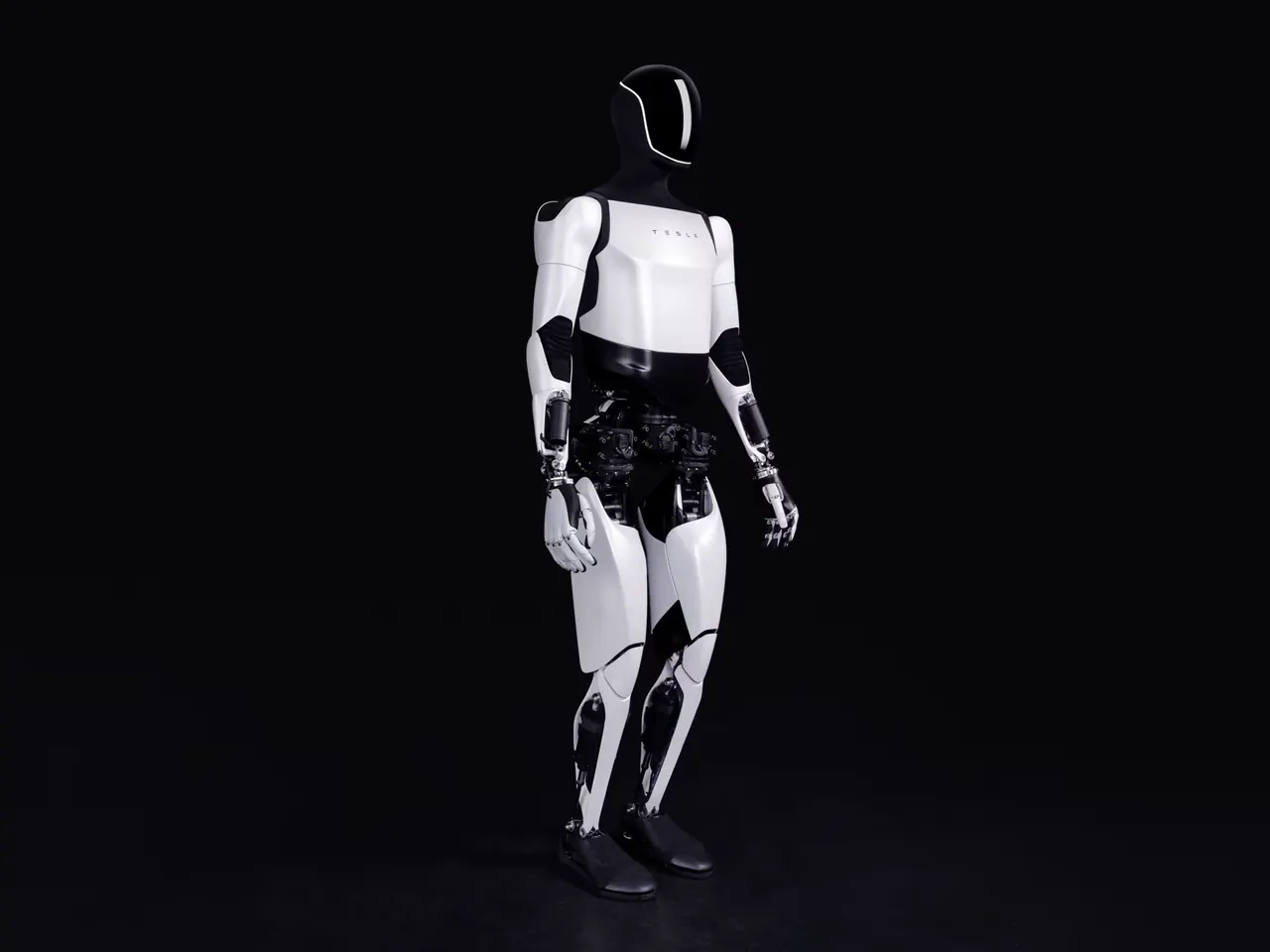
The problem was not the face or the shell, it was the gait. Almost every humanoid we have seen walks with bent knees and a rigid torso, because that makes balance control far easier. IRON did the opposite: it extended the leg, landed on the heel and rotated the hip — exactly what a person does, and exactly the hardest thing to program. When a robot abruptly breaks the visual pattern an audience is used to, the default reaction is to doubt the footage rather than the engineering. In this case the footage was real.
What is actually inside
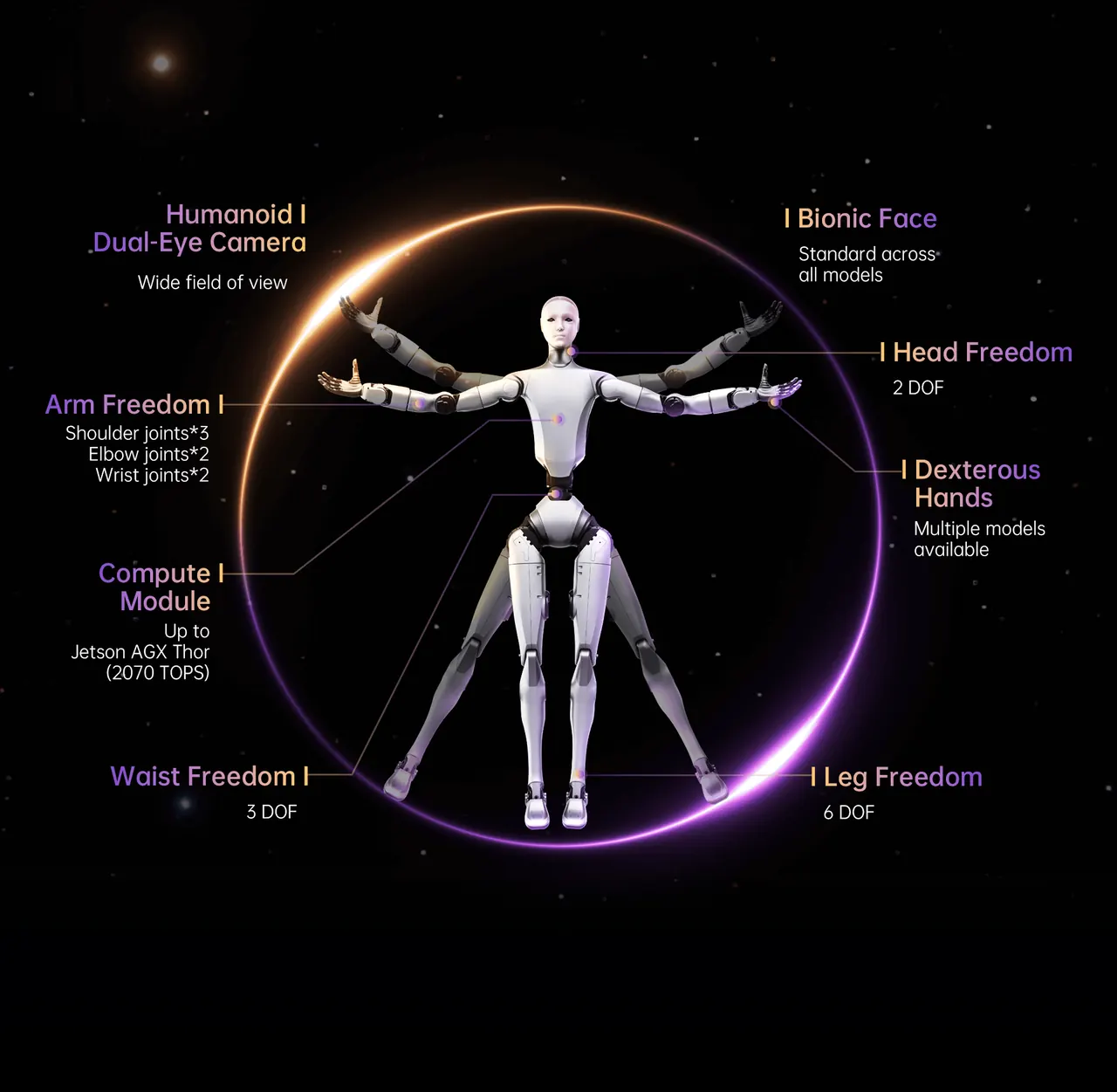
IRON carries somewhere around eighty degrees of freedom across the whole body, with more than twenty in each hand alone. The hand figure is the one that matters: a hand with twenty joints is not for opening doors, it is for manipulating small objects with the fingertips, which is the real bottleneck across the entire sector. Technical sources do not fully agree between the 2025 reveal and the 2026 spec sheets — some say 82 degrees of freedom, others 76 — so the number is best read as an order of magnitude rather than a settled fact. Underneath it runs all-solid-state batteries and a flexible spine.
Three in-house chips and 2,250 TOPS
The part XPeng sells as its edge is not the body, it is the brain. IRON carries three in-house Turing chips adding up to roughly 2,250 TOPS of on-board compute. This is not a marketing detail: a humanoid that depends on the cloud to make decisions is a useless humanoid the moment the connection drops or latency adds half a second. Building the chip in-house also means XPeng does not depend on somebody else's silicon supply to scale production, which is precisely where other manufacturers have stalled.
The brain: a second-generation VLA model
On top of the hardware runs a second-generation vision-language-action model, the same family of architectures used by Figure or Physical Intelligence: the robot sees, understands a natural-language instruction and generates the movements directly, with nobody scripting the sequence step by step. XPeng insists the demonstrations run without teleoperation — that is, without a human operator driving the robot from off-stage. That claim matters, because a good share of the spectacular robot videos in this sector are teleoperated and it is almost never disclosed.
$900 million and an assembly line
In August 2026 XPeng's robotics division raised around $900 million at a $6.3 billion valuation, the largest private embodied-AI round in China to date. On 7 September 2026 the company announced the production line was up and running. The stated plan is to close 2026 in mass production, start commercial sales in 2027 and reach over a thousand units a month, with a long-term goal of a million robots a year by 2030. That last figure should be read for what it is: an ambition, not a schedule.
The uncomfortable comparison with Tesla
The contrast with Optimus is why IRON travelled around the world. Tesla has been showing its humanoid since 2021 and, as of early 2026, still had no units doing useful work on a sustained basis; Fremont production started slowly and the V3 version piled up delays. XPeng showed a robot in November and had an assembly line ten months later. That does not mean IRON is the better robot — nobody knows that yet — it means the Chinese industrial tempo in this sector is ahead, and Tesla's head start has evaporated.
What is still unproven
Everything that counts. There are no independent evaluations of IRON outside XPeng's own demonstrations, no known real battery life under sustained work, no price or sales channel for individuals, and "mass production" in this sector has historically meant dozens of units rather than thousands. If you are thinking of buying a humanoid, IRON is not an option in 2026 and probably will not be in 2027 either outside industrial customers. What it undeniably is, is the best evidence yet that human-style walking is now a solved problem.