Warehouse robots: the million machines already moving your parcels
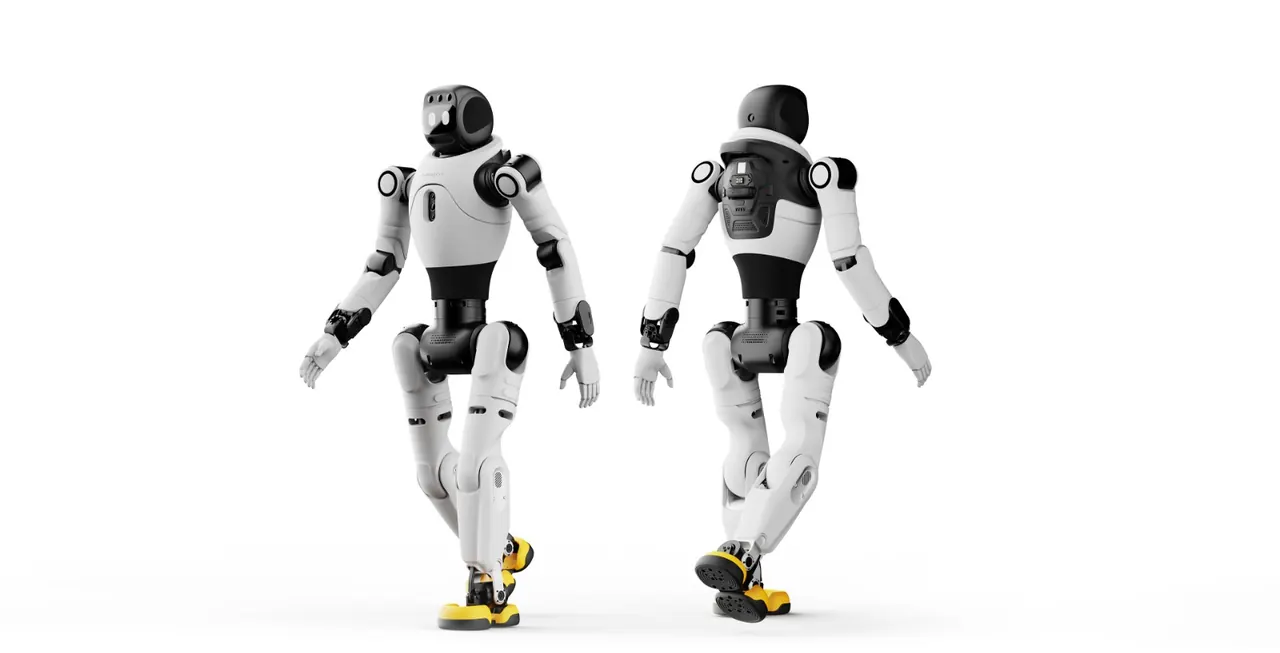
If you want to see real robotics working at scale, do not look at humanoid trade shows: look at a fulfilment centre. Amazon has passed one million industrial robots deployed across some three hundred facilities worldwide, and the company itself admits it now employs nearly as many robots as people. None of them walks on two legs, none has a face, and between them they move an enormous share of the planet's e-commerce.
How big the business is
The market for autonomous mobile robots in warehouse logistics was worth around $9.5 billion in 2025, moved to $11.48 billion in 2026, and is projected at $24.67 billion by 2030 — a compound annual growth rate of 21%. North America is the largest market; Asia-Pacific the fastest growing. The drivers are always the same three: e-commerce expansion, labour shortages and pressure for faster delivery.
The four kinds of robot in a warehouse
AMR is not a single machine. There are goods-to-person robots, which bring the entire shelving unit to the operator instead of making them walk kilometres a day; autonomous forklifts, which move pallets with no driver; inventory-scanning robots, which run the aisles recording what is there and flagging what is missing; and sortation robots, which route parcels by destination at speeds no person can match. Almost no warehouse uses only one type: they are combined.
How they navigate
This is the technical difference separating an AMR from a 1990s AGV. The AGV followed a magnetic strip or a wire buried in the floor: if something crossed its path, it stopped and waited. An AMR builds a map of the building, locates itself inside it and computes its own route, dodging obstacles and replanning in real time. The technologies vary — laser, vision, natural or hybrid navigation — but the principle is the same: the robot decides the path, not the floor.
What they actually do
Inventory management, order-fulfilment picking, cross-belt transport, replenishment and returns processing. The biggest buyers are e-commerce, grocery and retail, pharmaceuticals, automotive and third-party logistics operators. The usual combination is a fixed collaborative arm at the packing station and a fleet of mobile robots continuously bringing material to it and taking it away, with nobody pushing a trolley.
Amazon's million robots, in detail
Amazon started in 2012 by buying Kiva Systems and has been stacking up machine families ever since: Proteus, its autonomous mobile robot; Sparrow, the industrial arm introduced in 2022; and Sequoia, the containerised inventory system launched in late 2024 at its Shreveport, Louisiana facility. It also has Agility's Digit humanoid in pilot, so far dedicated to moving recycling containers. The count went from around 750,000 robots to over a million in a few years.
What happened to the jobs
This is where it pays to look at the data rather than the headlines. The next-generation Shreveport facility needs 30% more employees in reliability, maintenance and engineering roles than a conventional one. Amazon says it has upskilled more than 700,000 employees since 2019. That does not make automation painless: it means the real effect has been a change in workforce composition rather than a clean disappearance of jobs. The work that leaves is walking and pushing; the work that arrives is keeping machines running.
What to watch if the sector interests you
Three signals are worth more than any announcement. First, picks per hour per operator, the metric every purchase is justified with. Second, how many facilities have the system in production rather than in pilot, because the warehouse pilot is where most projects die. And third, whether the vendor publishes mean time between failures, because a fleet of a hundred robots with poor maintenance is a far bigger problem than a hundred people with the flu.